Walk-In Shower vs. Bathtub: Pros, Cons & What’s Best for Your Home (2026)
If you are planning a bathroom remodel, one decision shapes everything else: should you keep the bathtub or replace it with a walk-in shower? It is one of the most common questions we hear from homeowners, and the honest answer is that it depends on your household, your habits, and your plans for the home.
This guide breaks down the walk-in shower vs. bathtub debate side by side — accessibility, cleaning, cost, space, and resale value — so you can make the choice with confidence.
Quick Answer: Walk-In Shower vs. Tub at a Glance
| Factor | Walk-In Shower | Bathtub |
|---|---|---|
| Accessibility | Excellent — low or no threshold, easy step-in | Poor — high wall to climb over |
| Cleaning | Faster — fewer curves and crevices, squeegee-friendly glass | Slower — scrubbing the tub basin and caulk lines |
| Water use | Less — a typical shower uses less water than a full bath | More — filling a tub takes 40–70 gallons |
| Space feel | Opens up the room, especially with clear glass | Can make a small bathroom feel boxed in |
| Installation cost | Higher — typically $4,000–$20,000 for a full install | Lower — a standard tub install costs far less |
| Resale value | Great as a second bath upgrade; risky if it is the only bathing option | Safer — most buyers expect at least one tub |
| Family-friendliness | Poor for bathing toddlers or large dogs | Ideal for kids, pets, and soaking |
When a Walk-In Shower Wins
Accessibility and aging in place
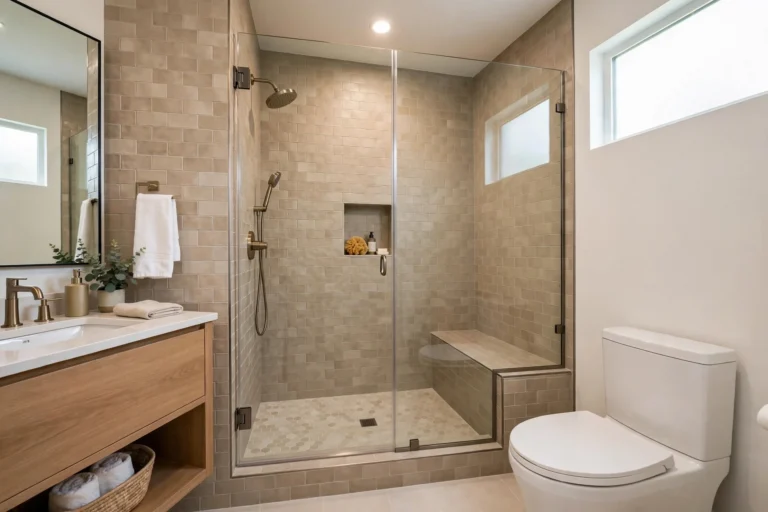
This is the number one reason homeowners make the switch. A walk-in shower with a low threshold or curbless entry removes the biggest fall hazard in the bathroom: climbing over a tub wall. Add grab bars, a built-in bench, and a handheld showerhead, and the bathroom becomes safe for seniors and anyone with limited mobility. If you plan to stay in your home for the long term, this is a future-proofing move.
A modern, open look
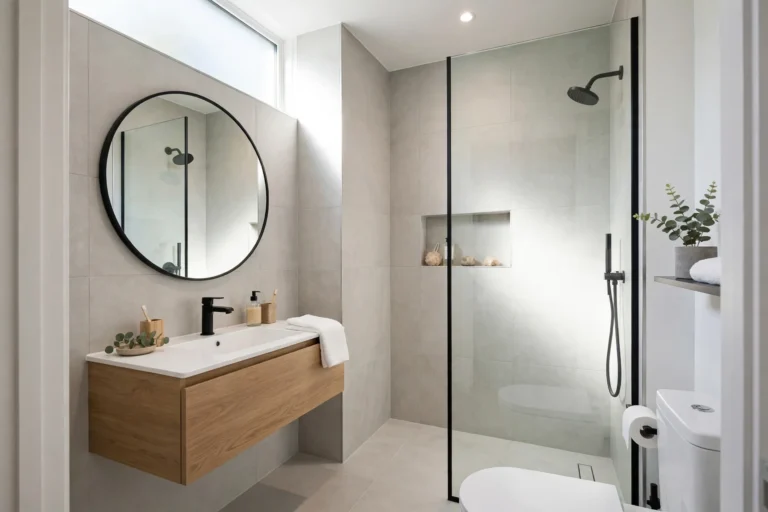
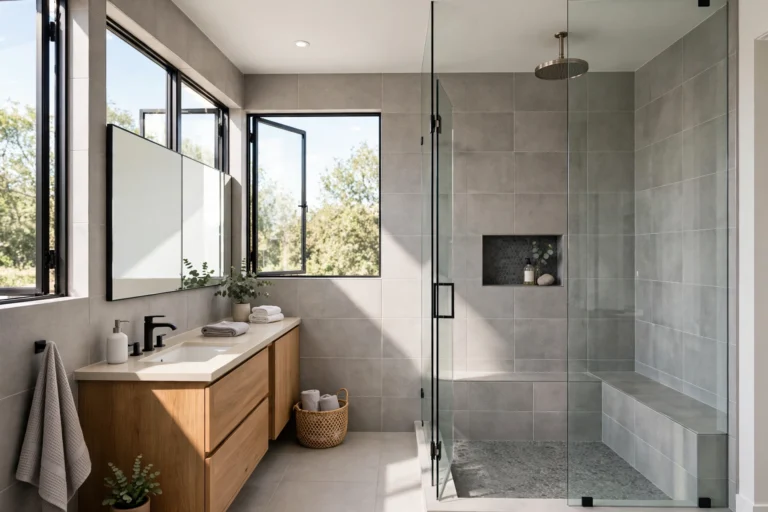
Walk-in showers — especially with frameless glass — make a bathroom feel larger and brighter. Sight lines run straight through the glass to the back wall, which visually expands even a modest bathroom. If your style leans modern, a walk-in shower delivers that spa-like feel a standard tub-and-shower combo cannot match.
Easier daily cleaning
Ask anyone who has scrubbed a tub surround lately. A walk-in shower has fewer curved surfaces and tight corners where soap scum and mildew collect. Large-format tile means fewer grout lines, and a quick squeegee after each shower keeps glass doors clear with minimal effort.
Faster routines and lower water bills
Showers are simply quicker than baths, and they use less water. If your household runs on busy mornings, a walk-in shower fits the routine better — and the lower water usage shows up on the utility bill over time.
For homeowners ready to make the change, our walk-in shower installation service in Kingsport covers everything from curbed designs to fully curbless, zero-threshold entries.
When Keeping the Tub Wins
Young children and pets
There is no good substitute for a bathtub when you have toddlers. Bathing a small child in a walk-in shower is awkward at best. The same goes for washing a large dog — a tub contains the water, the shampoo, and the shaking-off. If your household includes little ones or big pets, keep at least one tub.
The soaking factor
Some people genuinely love baths. A long soak after a hard day, Epsom salts for sore muscles, a quiet twenty minutes to unwind — a shower cannot replicate that. If bathing is part of how you relax, do not give it up for a trend. Your bathroom should serve your life, not a magazine spread.
Resale value: the one-tub rule
Here is the rule real estate professionals repeat most often: keep at least one bathtub in the home. Many buyers — especially families — filter specifically for homes with a tub. Removing the only tub in the house can shrink your buyer pool and, in some markets, trim the sale price. If you have two or more bathrooms, converting one to a walk-in shower while keeping a tub in another is the ideal balance.
Cost Comparison: Walk-In Shower vs. Bathtub
Cost is where the two options diverge sharply.
Walk-in shower: A professionally installed walk-in shower typically runs $4,000 to $20,000, depending on size, tile choice, glass style, and how much plumbing work is involved. A prefabricated shower unit lands at the lower end; a custom-tiled shower with frameless glass and a linear drain lands at the higher end. If the project includes removing an old tub and reworking plumbing, budget toward the middle of the range. For the full itemized breakdown, see our walk-in shower installation cost guide for Kingsport.
Bathtub: Installing or replacing a standard bathtub is significantly less expensive — often a few thousand dollars for a quality alcove tub with surround, since the plumbing footprint already exists. Premium soaking or jetted tubs cost more, but still generally less than a full custom walk-in shower build.
The bottom line on cost: A walk-in shower is the bigger investment, but it also delivers more in daily comfort, accessibility, and visual impact. A tub replacement is the budget-friendly refresh. Neither is “cheaper” in absolute terms without knowing your bathroom — which is why an in-person estimate matters more than any online range.
The Hybrid Option: Best of Both Worlds
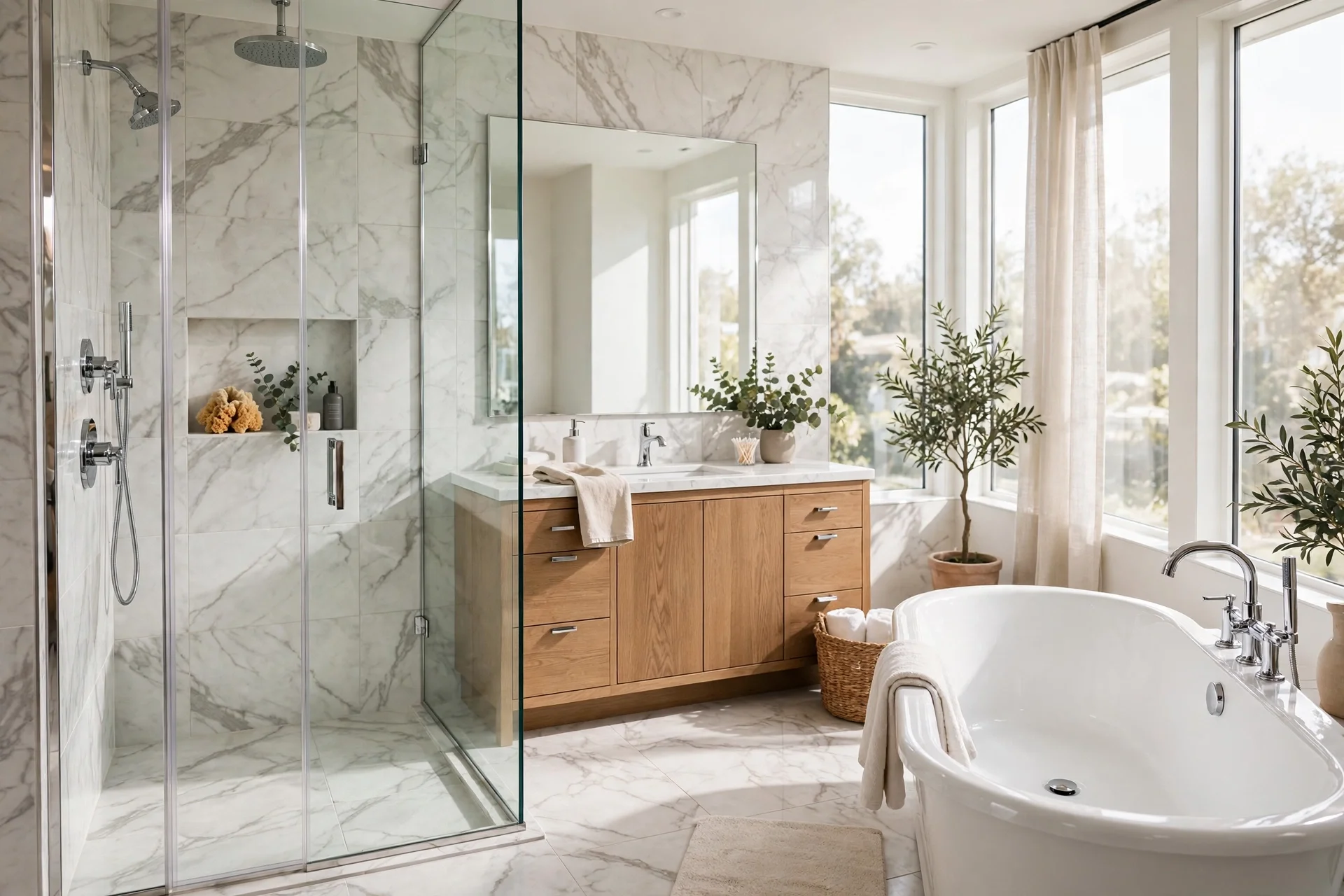
You do not have to choose one bathing style for the entire house. The most popular solution we install is the hybrid approach:
- Convert the primary bathroom to a walk-in shower — the one you use every day gets the accessibility, the modern look, and the easy cleaning.
- Keep the tub in the hall or guest bathroom — kids, pets, guests, and future buyers still have a bathtub option.
A tub-to-shower conversion in Kingsport is one of our most requested projects precisely because it delivers this balance: daily luxury in the bathroom you use most, practicality preserved everywhere else.
How to Decide: 5 Questions to Ask Yourself
Work through these honestly and the right answer usually becomes obvious:
1. Who uses this bathroom? Seniors or anyone with mobility concerns point strongly toward a walk-in shower. Toddlers point toward keeping the tub.
2. Is this the only bathing option in the home? If yes, think twice before removing the tub — resale value favors keeping at least one.
3. Do you ever take baths? Be honest. If the answer is “once a year,” you will not miss the tub. If it is “every Sunday,” keep it.
4. How long will you live here? Staying 10+ years? Prioritize your own comfort and accessibility. Selling in 2–3 years? Prioritize broad buyer appeal.
5. What does your budget allow? A walk-in shower costs more upfront. If the budget is tight, a quality tub replacement still transforms the bathroom for less.
Get Help Deciding — Free Estimate in Kingsport
Still torn between the two? The best way to decide is to talk through your specific bathroom, household, and budget with someone who installs both every week.
Call Kingsport Custom Bathrooms at (831) 666-1180 for a free estimate. We have been serving Kingsport homeowners since 2019, and we will give you honest guidance — including telling you when keeping the tub is the smarter move. Visit us at 140 W Main ST, Kingsport, TN 37660, or contact us today to get started.