Quartz vs Granite Bathroom Countertops
First, What Are They Actually Made Of?
This is where most of the differences start, so it’s worth getting straight.
Granite is natural stone. It’s cut straight out of the earth, sliced into slabs, polished, and sealed. Every slab is one of a kind — the veining, the speckles, the color shifts are all nature’s work. That’s the appeal, and also the catch: no two slabs are identical, so the sample you fall in love with is never exactly the slab that ends up in your bathroom.
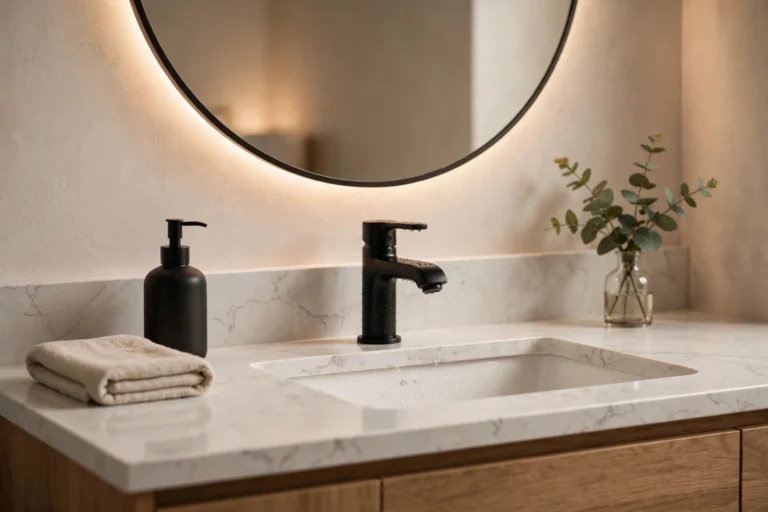
Quartz is engineered stone. It’s made of roughly 90–95% crushed natural quartz crystals mixed with resins and pigments, then pressed into slabs. The result is a consistent, non-porous surface that can mimic marble, granite, or stand on its own with clean, modern patterns. “Engineered” sometimes sounds like a downgrade. In a bathroom, it’s actually the reason quartz behaves so well.
That one difference — natural and porous versus engineered and sealed — drives almost everything that follows.
Quartz vs Granite Bathroom Countertops: Durability in Daily Use
Bathrooms are harder on countertops than kitchens are, in one specific way: water sits. Toothpaste, makeup, hair products, and cleaning sprays land on the surface every single day, and splashes from the sink keep the edges damp.
Quartz wins on stain resistance. Because it’s non-porous, quartz doesn’t absorb liquids. Red lipstick, hair dye, self-tanner, coffee — they wipe off instead of soaking in. Granite, being natural stone, is porous. It’s sealed at installation, and that sealer does a good job, but it wears down. Once the seal weakens, a spill left overnight can leave a mark that doesn’t come out.
Granite wins on heat resistance. You can set a hot curling iron or flat iron down on granite without a second thought — natural stone shrugs off heat. Quartz, thanks to the resin in it, can scorch or discolor if a very hot tool sits directly on it for a while. It’s not a common disaster, but it’s the one durability category where granite is clearly tougher. A trivet or heat mat solves it completely.
Scratches and chips: both are hard surfaces that handle normal bathroom use well. Granite is slightly harder and more chip-resistant at the edges. Quartz is a little more forgiving of impact — it’s less likely to chip if you drop something heavy on an edge, because the resin gives it a tiny bit of flex. In practice, neither should be cut on directly, and both will outlast the vanity underneath them.
The honest summary: quartz is the lower-worry surface for stains and daily mess; granite is the tougher surface for heat. For most bathrooms, the stain question matters more, because heat damage is easy to prevent and stains are not.
Maintenance: The Real Difference Nobody Mentions in the Showroom
If there’s one thing that decides this comparison for most homeowners, it’s maintenance.
Quartz is essentially maintenance-free. Wipe it with soap and water. That’s it. No sealing, ever. No special cleaners. No calendar reminders. It looks the same in year ten as it did in year one, with nothing more than normal cleaning.
Granite needs resealing. Typically once a year, sometimes every 6–12 months in a heavily used bathroom. It’s not a huge job — wipe on a sealer, let it soak, buff it off — but it is a recurring appointment that most people forget. And the consequence of forgetting isn’t dramatic, it’s slow: the stone gradually absorbs more, stains get a little more likely, and one day a makeup spill doesn’t wipe off the way it used to.
Here’s our blunt take: if you’re the kind of person who enjoys maintaining a home and will actually reseal on schedule, granite’s upkeep is no burden at all. If you know yourself well enough to know the sealer bottle will sit unopened in a cabinet, quartz is the honest pick. There’s no shame in choosing the surface that fits your life — that’s exactly what a good remodel does.
Cost: Quartz vs Granite Bathroom Countertops in 2026
Prices move with the stone, the color, and the edge profile, but typical installed ranges for bathroom vanity tops look like this:
- Quartz: roughly $50–$100 per square foot installed, including fabrication. Premium colors and thick edges push toward the top of that range.
- Granite: roughly $40–$90 per square foot installed. Exotic or rare slabs can run well above that; common colors like Ubatuba or Santa Cecilia sit at the friendlier end.
For a typical single-sink vanity, that works out to a few hundred dollars’ difference between comparable quartz and granite — not the gap many people expect. The bigger cost driver is usually the sink choice (undermount vs vessel), the edge profile, and whether the backsplash is included, not the material itself.
One cost people forget: granite’s resealing. A bottle of quality sealer is inexpensive, and a professional reseal runs modestly, but over 15 years it adds up to a real line item that quartz simply doesn’t have. Factor that in and the lifetime costs are closer than the install quotes suggest.
These are typical ranges, not quotes — your bathroom’s size, the slab you choose, and the vanity configuration all move the number. If you’re budgeting the whole project, our guide to tile installation cost in Kingsport is a good companion read for the other big surface in the room.
Looks: Natural Character vs Consistent Style
This one is genuinely personal, and there’s no wrong answer.
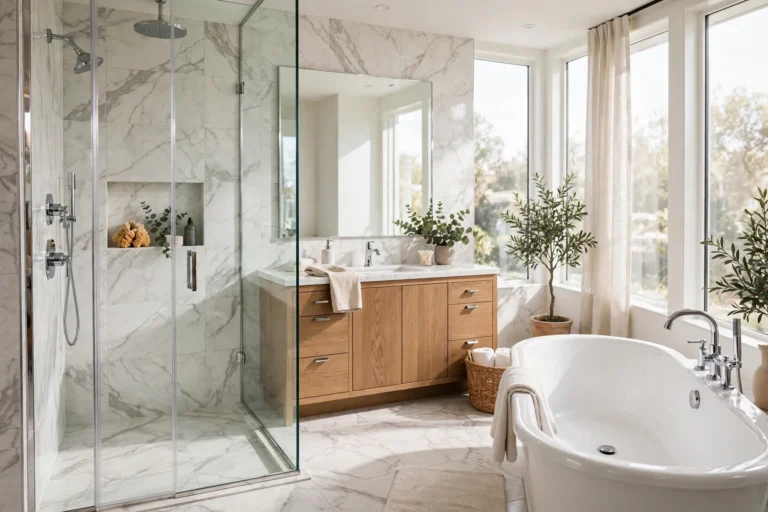
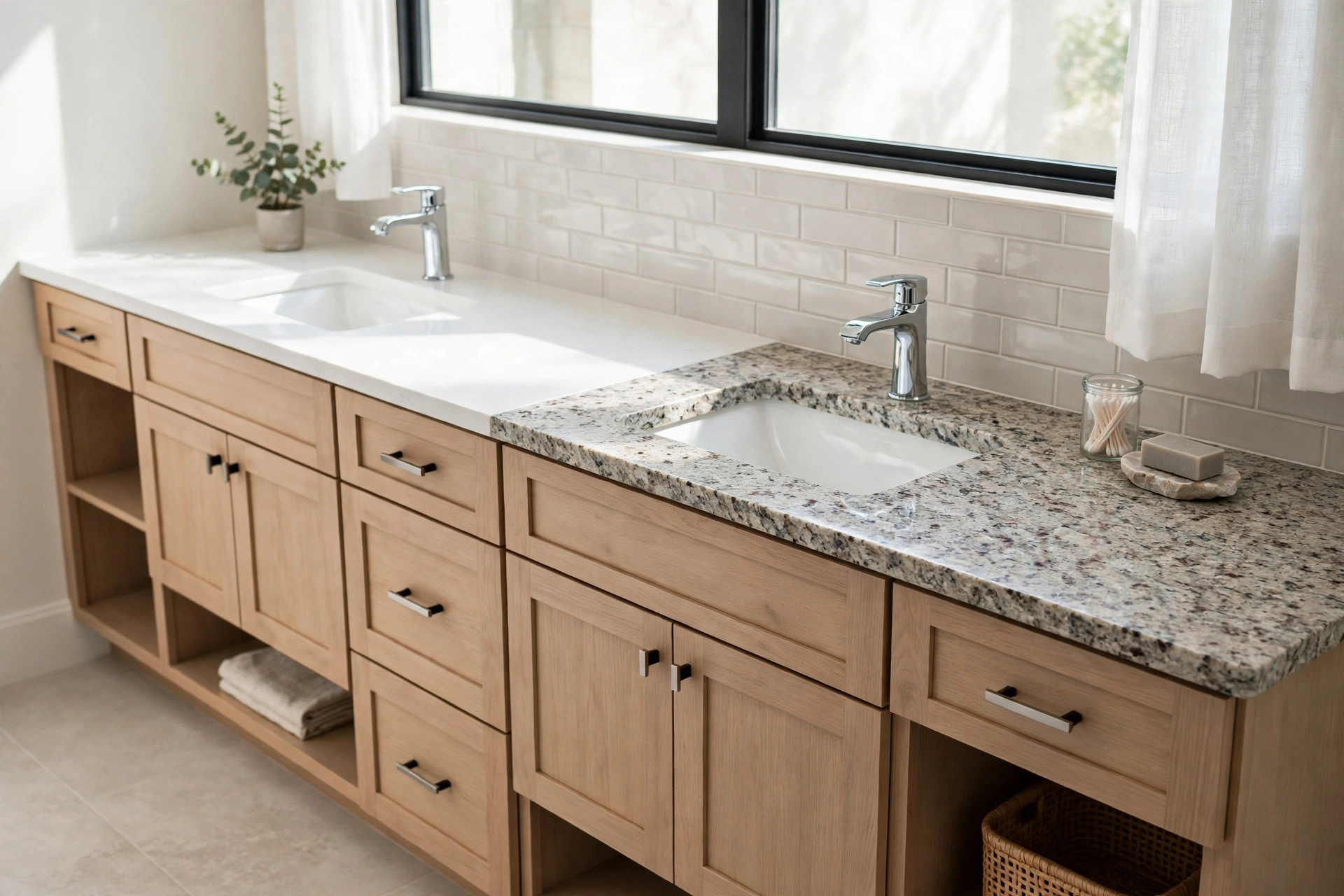
Granite looks like nature made it — because it did. Deep veining, wild color variation, slabs with movement that no factory can fully copy. If you want a bathroom that feels one-of-a-kind and a little dramatic, granite delivers a look quartz can’t quite match. The trade-off is that you should pick your actual slab, not a sample, because variation between slabs can be significant.
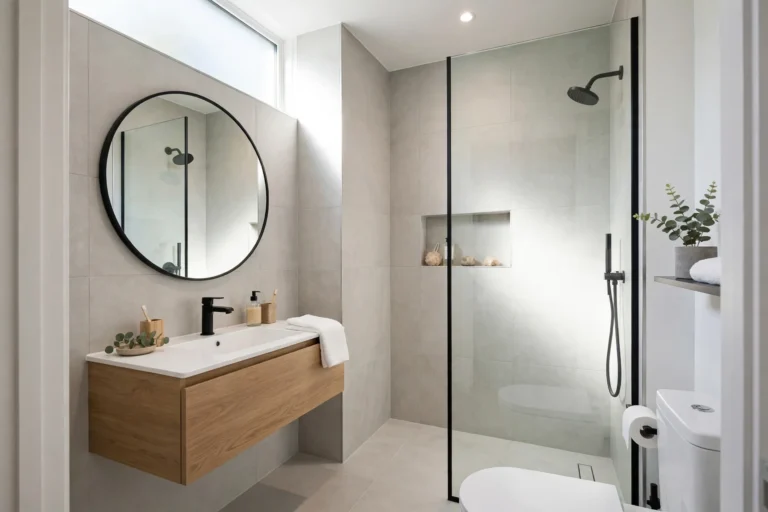
Quartz looks consistent and clean. The pattern repeats predictably, the color is exactly what you ordered, and it pairs beautifully with modern vanities, matte fixtures, and the clean-lined bathrooms most remodels aim for today. If you’re matching a countertop to tile you’ve already chosen, or you want a calm, uniform look, quartz makes that easy.
A practical tip: bring your tile and paint samples to the slab yard. Countertops are chosen under showroom lighting that flatters everything; the combination that looks right next to your actual bathroom flooring is the one that will look right at home.
Which Is Better for a Bathroom Specifically?
Kitchens get the granite-versus-quartz debate most often, but bathrooms have their own rules. Here’s how the comparison shakes out for bathroom use:
- Water exposure: quartz wins. Bathrooms are wet rooms. A non-porous surface that never needs resealing is simply better suited to constant splashes.
- Stain risk: quartz wins. Makeup, hair dye, and nail polish are exactly the stains granite’s sealer is defending against.
- Heat: granite wins. Hot styling tools are a bathroom reality, and granite doesn’t care.
- Maintenance: quartz wins, clearly. No sealing, ever.
- Uniqueness: granite wins. No two slabs alike.
- Resale value: a tie. Buyers in Kingsport respond well to both; what matters more is that the countertop looks high-quality and matches the bathroom.
- Cost: granite is usually slightly cheaper upfront; quartz is usually cheaper over the life of the bathroom.
Our Honest Recommendation
For most Kingsport homeowners, we recommend quartz for bathroom countertops — and the reason is simple: bathrooms punish porous surfaces, and quartz removes that whole category of worry. No sealing schedule, no stain anxiety, no slow decline when life gets busy and the maintenance slips. It pairs beautifully with the tile, fixtures, and walk-in shower styles that dominate today’s remodels, and it still looks brand new a decade later.
Choose granite if you love natural stone and mean it — if the idea of a one-of-a-kind slab genuinely excites you, and you’re happy to reseal it once a year. Granite bathrooms can be stunning, and a well-maintained granite top will serve you for decades. Just go in with your eyes open about the maintenance, pick your actual slab in person, and use a trivet for hot tools.
Either way, the countertop is only as good as the installation underneath it. A level vanity, a properly sealed sink cutout, and caulked seams at the wall matter more than the brand name on the slab. That’s true of every surface in a remodel — and it’s why the installer matters as much as the material.
Still deciding between the two? Call (831) 666-1180 or get in touch through our contact page — bring your tile samples and your questions, and we’ll help you pick the countertop that fits your bathroom, your budget, and how you actually live in the space.
Frequently Asked Questions
For most bathrooms, quartz. It's non-porous, so it never needs sealing and resists stains from makeup, hair dye, and cleaning products that granite's sealer has to defend against. Granite is better only on heat resistance and natural uniqueness — if you love one-of-a-kind stone and will reseal it yearly, granite is a great choice too.
Yes. Granite is porous natural stone and should be sealed at installation, then resealed roughly every 6–12 months in a bathroom. Skip the resealing and the stone gradually absorbs more moisture and stains. Quartz, by contrast, never needs sealing at all.
It's best not to. Quartz contains resin, which can scorch or discolor under prolonged direct heat from a curling iron or flat iron. Granite handles heat without issue. With quartz, a simple trivet or heat-resistant mat completely solves the problem.
Granite is usually slightly cheaper upfront — roughly $40–$90 per square foot installed versus $50–$100 for quartz. But granite's recurring resealing adds cost over time, so the lifetime gap is smaller than the install quotes suggest. For a typical single-sink vanity, the difference is a few hundred dollars either way.
Very rarely. Quartz is non-porous, so liquids like makeup, hair dye, and coffee sit on the surface instead of soaking in, and they wipe off with soap and water. That's the main reason quartz is so popular for bathroom vanities — it stays looking new with ordinary cleaning alone.