How Long Does a Bathroom Remodel Take? A Realistic Timeline (2026)
Here’s the question hiding behind the question. Nobody actually lies awake wondering about the number of weeks. What keeps Kingsport homeowners up at night is this: how long am I going to be without a working bathroom? And is this going to turn into one of those horror stories — you know the one, the neighbor whose “two-week remodel” was somehow still going in month three?
Fair concerns. Let’s give you the honest answer, then walk through exactly where the time goes — and where projects go off the rails.
So What’s the Honest Answer?
It depends on scope, but here are the realistic ranges for a professional crew:
- Cosmetic refresh (paint, fixtures, hardware, new mirror and lights — no tile or plumbing changes): a few days to 1 week
- Standard full remodel (new tile, vanity, toilet, fixtures, same layout): 2 to 4 weeks of construction
- Major remodel with layout changes or custom work (moving plumbing, expanding the footprint, intricate tile): 4 to 6+ weeks
Notice we said “of construction.” There’s also a planning phase before anyone picks up a hammer — design decisions, material selection, ordering, permits — which typically takes 1 to 3 weeks. A contractor who starts demolition before your tile has arrived isn’t fast. He’s setting you up for a delay.
What Happens During Each Phase? (And How Long Each Takes)
Here’s what each phase involves and why it takes the time it does:
| Phase | Typical Duration | What’s Happening |
|---|---|---|
| Planning & materials | 1–3 weeks (before demo) | Finalize design, order every material, pull permits |
| Demolition | 1–2 days | Old fixtures, tile, and drywall come out |
| Plumbing & electrical rough-in | 1–3 days | Pipes, drains, valves, wiring, and boxes go in behind walls |
| Inspections | 1–3 days | If permitted, the city checks rough-in work before walls close |
| Waterproofing & backer board | 2–4 days | Cement board hung, waterproofing membrane applied and cured |
| Tile setting | 5–10 days | Floor and shower tile set, then grouted, then cured |
| Paint & finishing | 1–2 days | Walls painted, trim and caulk finished |
| Fixtures & vanity install | 2–3 days | Toilet, vanity, faucets, lighting, mirror, accessories |
| Glass shower doors | 1 day install (measured after tile) | Doors are custom-measured once tile is done — allow 1–2 weeks lead time |
| Punch list & walkthrough | 1 day | Final details, touch-ups, and your approval |
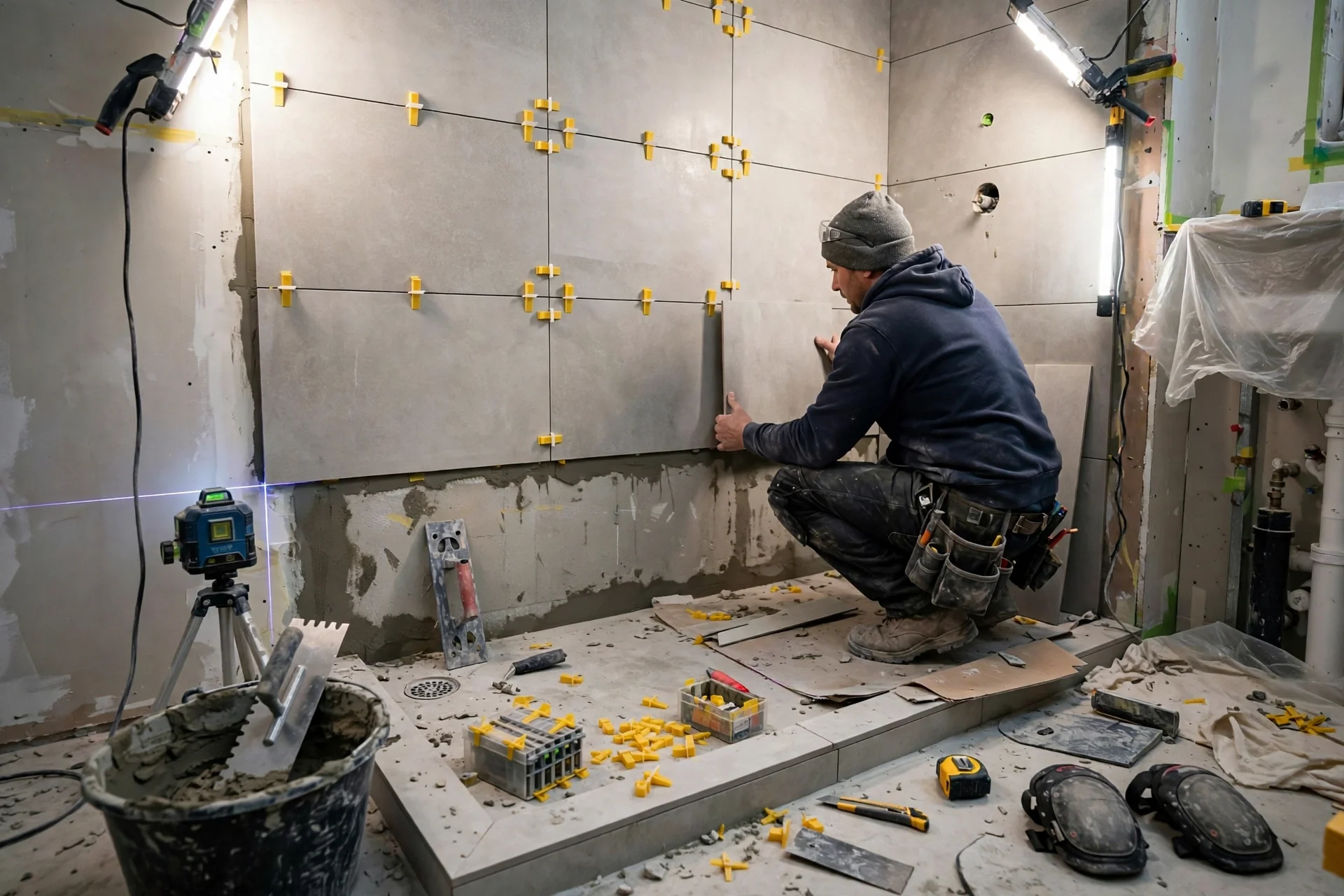
A few things worth knowing about this sequence. First, tile is almost always the longest phase, and there’s no honest way to rush it. Tile gets set one piece at a time, thinset needs to cure before grouting, and grout needs to cure before the shower gets used — especially in the fully tiled walk-in showers we build across Kingsport. Intricate patterns — herringbone, mosaics, niche insets — add days because every cut is done by hand. Anyone who promises to tile your shower in a day is either skipping steps or planning to come back when it leaks.
Second, glass shower doors are measured after the tile is finished, because the opening has to be precise. That means a 1–2 week wait while the glass is fabricated — one reason tub-to-shower conversions need that planning buffer built in from the start.
Third, the phases overlap a little, but not as much as you’d hope. You can’t paint before drywall is finished, and you can’t set fixtures before tile is cured. Remodeling is a relay race, not a sprint with everyone running at once. For a second opinion, Bennett Contracting’s phase-by-phase breakdown is worth comparing against ours.
6 Things That Delay Bathroom Remodels (And How to Prevent Each One)
Most blown timelines aren’t bad luck. They’re predictable — which means they’re preventable. Here are the six culprits we see most, and what to do about each:
1. Materials aren’t on site when demolition starts. This is the number one delay in the industry. The vanity is backordered, the tile is “shipping next week,” and your gutted bathroom sits idle. *Prevention:* don’t let anyone swing a hammer until every material is in hand or has a confirmed delivery date. Get it in writing.
2. Hidden water damage or mold behind the walls. Especially common in older Kingsport homes. Rotted subfloor or moldy framing has to be repaired before the new bathroom goes in. *Prevention:* budget a 10% contingency for both money and time. If your home is 30+ years old, assume something will turn up and you’ll never be caught off guard.
3. Change orders in the middle of the project. You pick a different tile after the first one is ordered. You decide to move the vanity after the pipes are set. Every change means reordering, rescheduling, and rework. These are among the most expensive mistakes Kingsport homeowners regret. *Prevention:* finalize every single selection — tile, fixtures, paint colors, hardware — before demolition day. All of them.
4. Permit and inspection waits. If your project moves plumbing or electrical, Kingsport will want permits and inspections, and inspectors run on their own schedule. *Prevention:* a good contractor pulls permits before demo and sequences inspections so the crew keeps working around them. Ask how they handle this before you sign.
5. A contractor juggling too many jobs. Some contractors book five projects and rotate one crew between them. Your “two-week” bathroom gets two days a week. *Prevention:* ask directly — who will be on site each day, and is my project your crew’s primary job? Get the schedule in writing before work starts.
6. Tile complexity you didn’t budget time for. That gorgeous basketweave mosaic takes three times longer to install than large-format porcelain. *Prevention:* when choosing tile, ask your contractor how many days each option adds. Then decide if the look is worth the wait. Sometimes it absolutely is — just go in with eyes open.
Can You Stay in Your Home During the Remodel?
Usually, yes. Here’s the practical reality:
If you have a second bathroom, daily life barely changes. The work zone gets sealed off with plastic sheeting to contain dust, noisy work happens during daytime hours, and you just use the other bathroom.
If it’s your only bathroom, it takes more planning. Water gets shut off on certain days (usually during plumbing rough-in and fixture installation), so you’ll want a plan for those days — a neighbor, a gym membership, or a very understanding relative. Talk through the shutoff schedule with your contractor before demo so there are no surprises.
Either way, expect some dust and noise during demolition and tile cutting. It won’t be silent, but a professional crew keeps the mess contained to the work area and cleans up daily. If you’re weighing whether to DIY or hire a pro, timeline is worth factoring in — a DIY remodel almost always takes two to three times longer than a pro crew, because you’re learning each step as you go.
Frequently Asked Questions
Get a Real Timeline for Your Bathroom
Guides and averages are useful, but your bathroom has its own variables — its size, its condition, and what you want it to become. The only timeline that matters is yours.
Call Kingsport Custom Bathrooms at (831) 666-1180 for a free estimate. We’ll walk through your bathroom, discuss your goals, and give you a written schedule before any work begins — so you know exactly how long the job will take. You can also contact us online to set up a time that works for you.
If you’re still in the planning stage, our custom bathroom remodeling and full bathroom renovation pages walk through what’s included in each type of project.